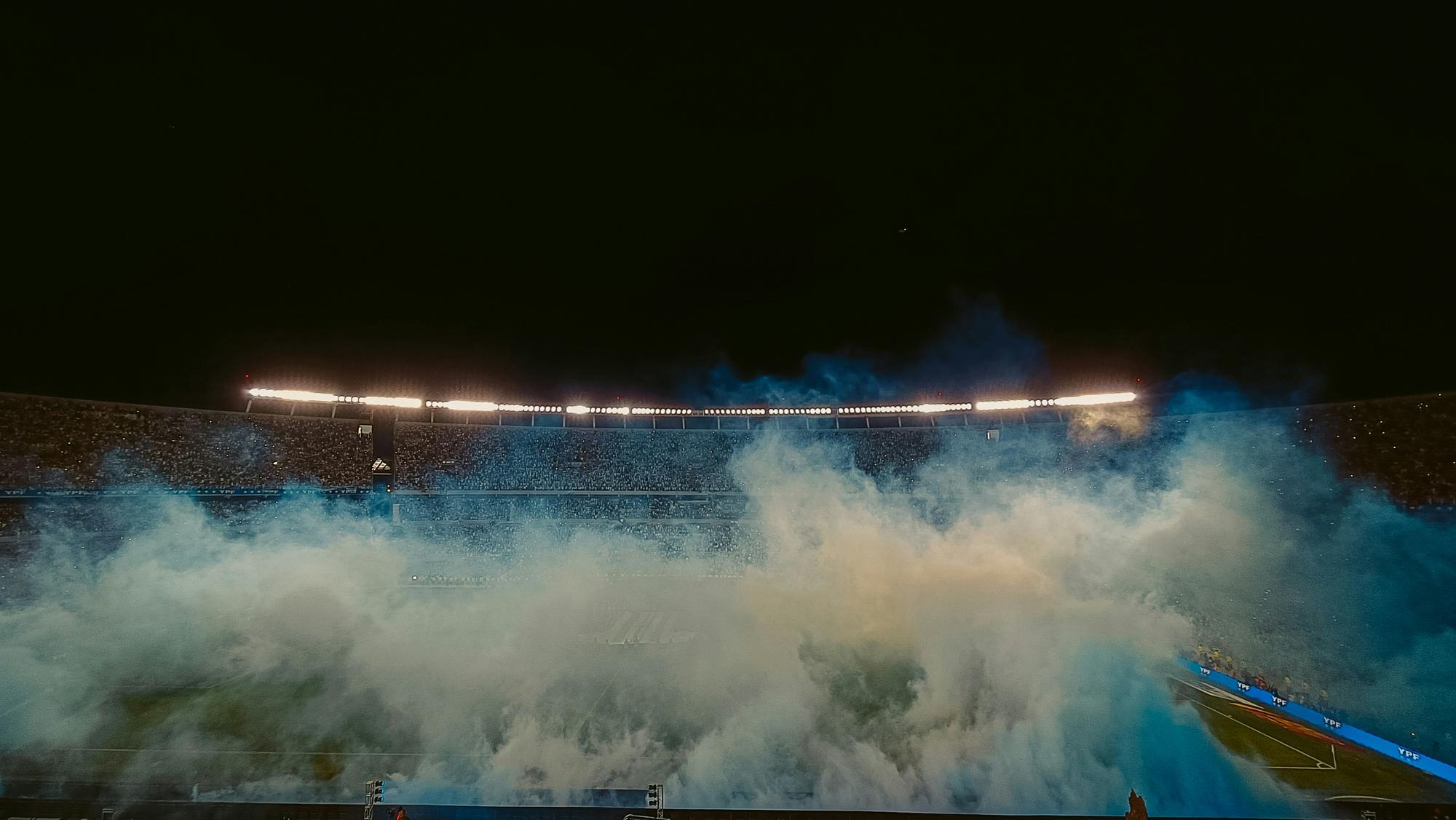
A floodlit stadium in Argentina. Photo: Cristian Tarzi on Unsplash
What are you looking at, Bobo?
Messi’s angriest five seconds became a slogan on mugs, T-shirts and tattoos. A 60-year-old psychology experiment explains why the world copied those five seconds and ignored the other 85.
It lasts about five seconds.
It is 9 December 2022, and Lionel Messi is in the tunnel at the Lusail Stadium in Qatar. Argentina have just knocked the Netherlands out of the World Cup on penalties, after one of the most bad-tempered matches the tournament has ever seen. He is answering a television reporter’s questions.
Then his eyes leave the reporter. Something beyond the camera has caught them.
For two seconds he looks confused, like a man trying to place a face. Then annoyance. Then, so briefly you could miss it, a flicker of something harder: frustration, perhaps anger.
“¿Qué mirás, bobo?”
What are you looking at, fool?“Tranquilo, tranquilo, Leo,” says the reporter gently. Easy, easy, Leo.
And Messi is calm again, talking through the match like a coach going over the game tape. He carries on like that for well over a minute.
Five seconds out of ninety went viral
Messi’s post-match interview, 9 December 2022
Five seconds out of ninety. Ask anyone in Argentina which bit they remember.
The battle of Lusail
To understand those five seconds, you need the two hours before them.
Argentina led 2–0. Then Wout Weghorst, a tall Dutch striker who had come off the bench, scored twice, the second in the final moments from a cleverly worked free kick: instead of shooting, the taker passed the ball into the box for Weghorst to score. Extra time, penalties, and Argentina through. Along the way came multiple mass confrontations, 18 yellow cards and one red, a World Cup record. FIFA opened disciplinary proceedings against both teams.
Messi was furious with the referee for awarding that late free kick. Weghorst, for his part, has said that after the match he only wanted to shake Messi’s hand. Whatever happened off camera, it was Weghorst whom Messi saw over the reporter’s shoulder.

Fans at the Obelisco, Buenos Aires. Photo: Mateo Krössler on Unsplash
“¿Qué mirás, bobo?”
From five seconds to a T-shirt
Within days, the phrase was everywhere in Argentina. Shops printed it on mugs, T-shirts and caps. People had it tattooed. Musicians turned it into songs and remixes.
One shopkeeper explained why it caught on: Messi had always been so calm and quiet that this was something new. Fans said that, at last, he reminded them of Maradona.
And one 67-year-old woman bought the T-shirts for her three grandsons, saying the phrase was mild and even sweet compared to what is usually shouted at football in Argentina.
Keep that image in mind: a grandmother buying her grandsons the words of their hero’s angriest moment. Because 60 years earlier, a psychologist at Stanford University had shown exactly what happens next.
The Bobo doll
In the early 1960s, Albert Bandura invited 72 children, aged three to five, into a playroom at Stanford’s nursery school. Some watched an adult attack a large inflatable clown called a Bobo doll: punching it, hitting it with a mallet, kicking it around the room. Others watched an adult play quietly.
Later, each child played for 20 minutes in a room of toys, including a smaller Bobo doll, while researchers watched through a one-way mirror. The children who had seen the aggressive adult were far more likely to attack the doll themselves, often copying the adult’s exact actions and words. They didn’t need to be rewarded, or told to do it. Watching was enough.
A few years later, Bandura went further. This time, children watched a film of an adult attacking the doll, but with three different endings. In one, the adult was rewarded with praise and sweets. In another, the adult was told off. In the third, nothing happened.
Then each child was left with a Bobo doll of their own, and Bandura counted.
72 children, three rooms
Each child watched an aggressive adult, a calm adult or no adult at all. Then they were left alone with a Bobo doll.
Each dot is one child, coloured by the published average for their group. Individual scores were never published. See the numbers.
The children who had watched the adult being told off copied the least. On the face of it, punishment worked.
Then came the twist. Bandura offered every child a reward for showing what the adult had done, and the differences largely disappeared. The children who had held back could do all of it, in detail, when it was finally worth their while.
They had learned it either way. Seeing the punishment had only stopped them performing it.
Back to Lusail
Now watch those five seconds again, the way Bandura would.
The model is the most admired footballer on earth, famous for being calm. That alone makes the moment impossible to miss. The behaviour is a short, catchy phrase that anyone of any age can repeat.
And the consequences? On the night, there was a gentle “tranquilo” from a reporter. It worked: Messi calmed down at once. But that wasn’t the reinforcement anyone else saw. What followed was praise, merchandise, songs, comparisons with a national legend and, nine days later, the World Cup itself.
Five seconds to a T-shirt
- Step 1
Attention
The calmest player on earth loses his temper. Impossible to miss.
- Step 2
Retention
A short phrase, replayed again and again until no one could forget it.
- Step 3
Reproduction
A short, catchy phrase that anyone of any age can say.
- Step 4
Motivation
Praise, merchandise, songs, Maradona comparisons, and then the World Cup.
In Bandura’s terms, that is the rewarded-model condition, played out on a national scale.
The edit
There is one more difference between Bandura’s playroom and real life. In the experiment, researchers controlled exactly what the children saw. With a viral moment, editors do.
The full interview shows a calm professional having a brief wobble. Many of the versions that spread were far shorter. Most people never saw the 85 seconds of calm analysis. The edit decided which Messi there was to copy.
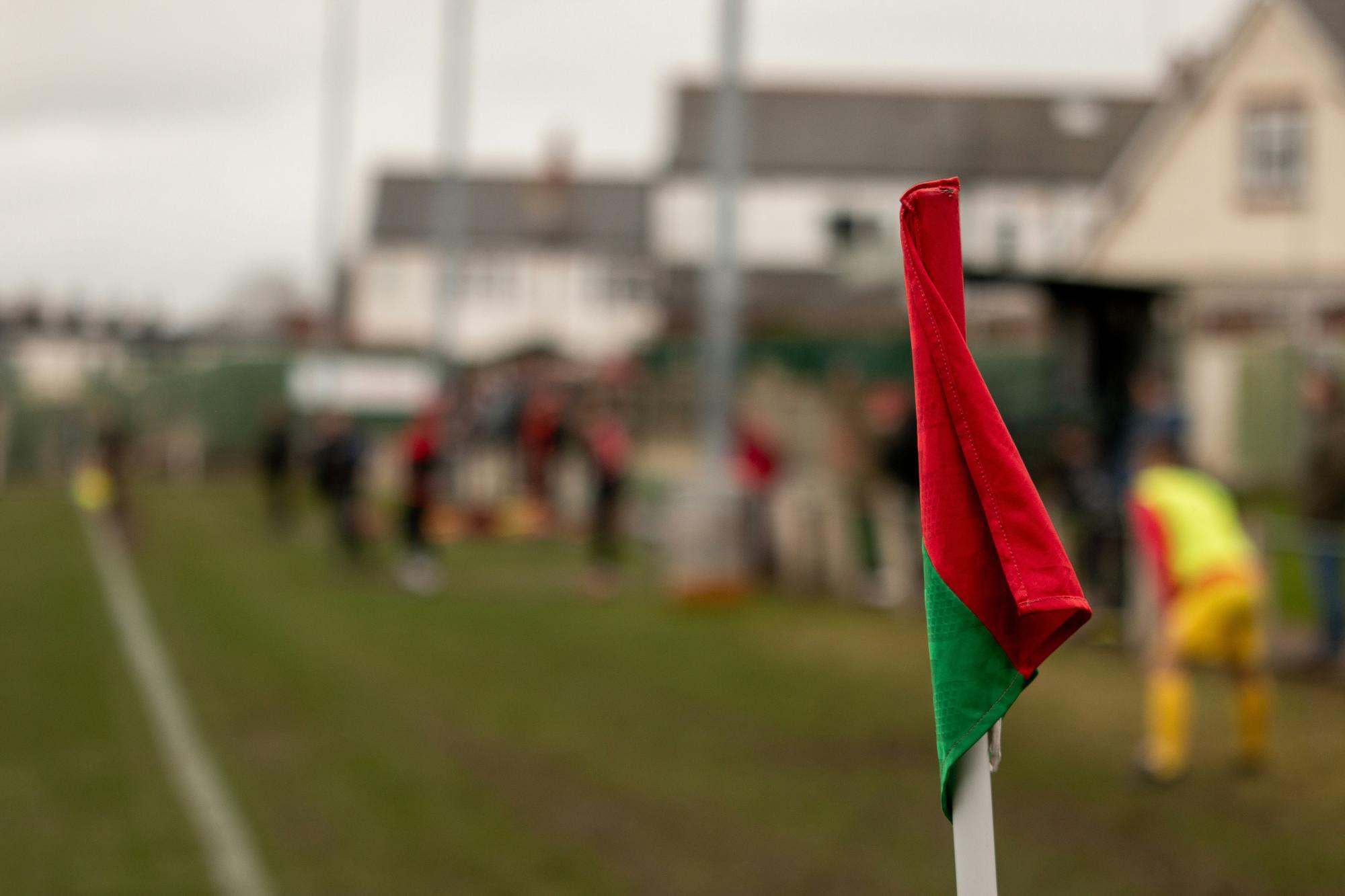
A grassroots pitch. Photo: Adam Knights on Unsplash
Sunday morning
Bandura’s children didn’t only copy strangers on film. They copied the adults they could see.
In English grassroots football, the FA’s own research has found that most abuse aimed at child referees comes from parents on the touchline.
Children rarely copy everything a footballer does. They copy the moments the adults around them repeat, replay, laugh at and buy.
Messi gave the world 90 seconds. We chose the five.
OptionalWatch the full interview: the post-match tunnel interview on YouTube.
For your exam
Bandura et al. (1961) is a named core study for OCR and features in social learning theory on AQA and Edexcel. This box gives you what you need to revise it.
Aim
To see whether children would imitate aggression they had watched an adult model perform, and whether the model’s sex mattered.
Method
A lab experiment at Stanford’s nursery school with 72 children aged 3 to 5 (36 boys, 36 girls). Children watched an aggressive model, a non-aggressive model, or no model. They were then mildly frustrated and played for 20 minutes in a room of toys, including a Bobo doll, while observers watched through a one-way mirror.
Findings
Children who saw the aggressive model showed far more imitative aggression, often copying exact actions and words. Boys copied more physical aggression than girls. Both sexes copied the male model’s physical aggression more, while verbal aggression tended to follow the same-sex model.
Follow-up, Bandura (1965)
Children saw the model rewarded, punished or facing no consequences. Those who saw punishment imitated least, but when offered rewards, all groups could reproduce the behaviour. Learning and performance are not the same thing.
Mediational processes
Imitation depends on four steps.
- Attention: noticing the behaviour.
- Retention: remembering it.
- Reproduction: being able to do it.
- Motivation: expecting it to be worth doing, often through vicarious reinforcement.
Evaluation points
- Strength: tight control of variables lets us infer cause and effect.
- Weakness: a Bobo doll is designed to be hit, so children may have been playing, not being aggressive (demand characteristics).
- Weakness: an artificial lab setting and immediate testing tell us little about long-term, real-world behaviour.
- Weakness: deliberately exposing young children to aggression raises ethical concerns.
- Debate: the study shows learning from models, but cannot explain why some children who watch aggression never copy it.
Exam-style question · 4 marks
Using the Messi example, explain how vicarious reinforcement might lead young fans to imitate a footballer.
Sources
- Buenos Aires Times on the merchandise boom
- Noticias Caracol on Weghorst’s account (Spanish)
- FCUpdate on the songs and tattoos (Dutch)
- University of Chichester and the FA on youth referees
Photos
- Floodlit stadium: Cristian Tarzi on Unsplash
- The Obelisco, Buenos Aires: Mateo Krössler on Unsplash
- Corner flag: Adam Knights on Unsplash
- Graphics drawn for The Replay Lab